Syphilis: symptoms, stages, testing and treatment
Definition : Syphilis is a bacterial STI that often starts with a painless sore (chancre) and can then progress silently for years; it is detected with a blood test and cured with a penicillin injection.
- Keywords
- chancre, the pox, treponema, STI
- Topics
- Sexual Health & Prevention
- Updated
What is syphilis?
Syphilis is an infection caused by a bacterium, Treponema pallidum. It spreads through anal, oral or vaginal sex via contact with an infectious sore, often invisible or painless. According to WHO, about 8 million adults caught it worldwide in 2022. In France, Santé publique France counted about 6,500 diagnoses in community care in 2024, up 12% since 2022.
Transmission is highest during the first two years of infection.
What are the symptoms?
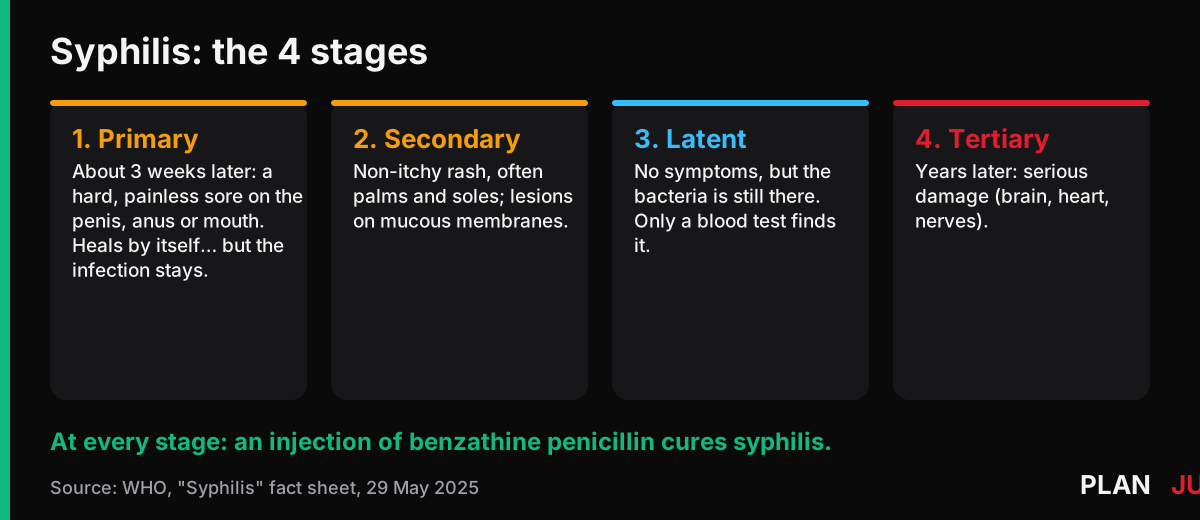
Primary stage
On average 3 weeks after contact, a chancre appears: a round, painless, often firm sore on the penis, anus, in the rectum or in the mouth. It heals on its own within weeks… but the bacteria stays. In the anus or throat, it very often goes unnoticed.
Secondary stage
A few weeks later: a non-itchy rash, typically on the palms and soles, whitish patches in the mouth or moist areas, sometimes fever, swollen glands, patchy hair loss.
Latent stage
No symptoms at all. Only a blood test finds the infection.
Tertiary stage
Years later, without treatment: serious damage to the brain, nerves, heart or eyes. Syphilis can also affect the nervous system at any stage (neurosyphilis): problems with sight, hearing or unusual headaches = see a doctor urgently.
How is it tested?
With a blood test (serology), at a lab, sexual health clinic or your doctor’s. A chancre can also be swabbed. Rapid tests exist. Testing is recommended every 3 months if you have several partners; in France it’s free without prescription at labs if you are under 26 (Mon test IST).
How is it treated?
Syphilis is curable. The reference treatment recommended by WHO is benzathine penicillin, as an intramuscular injection: a single injection for recent syphilis, three injections a week apart for older syphilis. If you are allergic, another antibiotic is offered.
After treatment:
- no sex until sores have healed and as advised by the doctor;
- follow-up blood tests check that it’s cured;
- tell your partners from the last few months so they get tested and treated;
- you are not immune: you can catch it again.
How to prevent it?
- Condoms reduce the risk without removing it (a chancre can be outside the covered area).
- Avoid sex with someone who has an unexplained sore or rash.
- Regular testing, even without symptoms.
- DoxyPEP can be discussed case by case.
Important reminder: active syphilis increases the risk of HIV transmission.
Informational article based on official sources. It does not replace medical advice: if in doubt, if you have symptoms or took a risk, see a health professional or a sexual health clinic.
Sources
Figures and recommendations checked against:
- World Health Organization (WHO) — Syphilis – fact sheet (29 May 2025)
- Santé publique France — HIV and bacterial STIs in France. 2024 report (23 October 2025)
- Santé publique France (Sexosafe) — IST : se protéger, se dépister, se soigner
- Santé publique France (Sexosafe) — Fellation : on prend ses précautions !