Mental health of gay and bi men: depression, violence and where to find help
Definition : In France, gay and bisexual men report more than twice as many depressive episodes and suicidal thoughts as straight men; a large part of that gap is explained by violence and discrimination, and help exists.
- Keywords
- mental health, depression, suicide, homophobia, minority stress, gay
- Topics
- Sexual Health & Prevention
- Updated
What the figures say
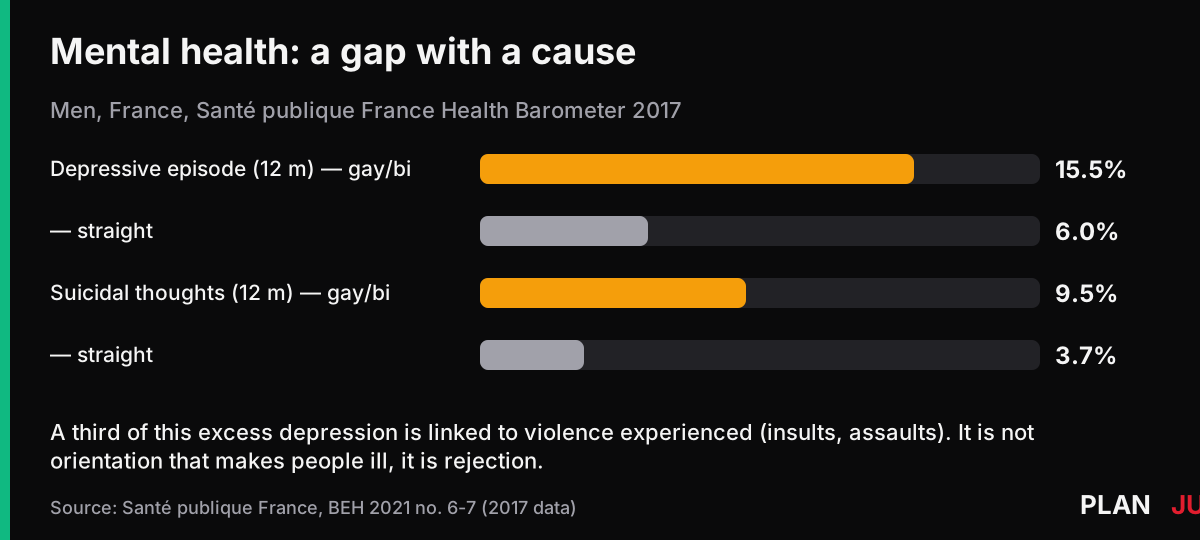
The Santé publique France Health Barometer 2017, analysed in the Weekly Epidemiological Bulletin in 2021, compares mental health by sexual orientation. Among men, compared with straight men, gay and bisexual men report:
- a major depressive episode in the past year: 15.5% vs 6.0%;
- current depressive symptoms: 8.3% vs 3.6%;
- suicidal thoughts in the past year: 9.5% vs 3.7%;
- a suicide attempt in the past year: 0.9% vs 0.3%.
It’s not orientation, it’s rejection
The same study shows that violence experienced (verbal or physical) explains about a third (33%) of the excess depression among gay and bi men. In Santé publique France’s 2019 ERAS survey, 28% of men who have sex with men reported being victims of homophobic insults. Researchers call it minority stress: living in the closet, expecting rejection, absorbing remarks, it wears you down.
Other factors weigh too: family rejection, loneliness, body and performance pressure on apps, an HIV diagnosis, HIV stigma, and chemsex, which Santé publique France links to signs of psychosocial distress.
Signals not to ignore
- sadness, emptiness or irritability lasting more than two weeks;
- losing interest in things you used to enjoy, including sex;
- sleep problems, tiredness, withdrawing from others;
- drinking or using drugs to “get through”;
- chemsex comedowns getting darker;
- thoughts of death or suicide.
Where to find help?
- Crisis or suicidal thoughts: in France call 3114 (national suicide prevention line, free, 24/7); in immediate danger, 112 (15 in France). Elsewhere, contact your local emergency number or crisis line.
- Your GP: in France they can refer you to reimbursed psychologist sessions (“Mon soutien psy”).
- CeGIDD clinics offer sessions with psychologists and sexologists, including for violence linked to orientation.
- LGBT+ organisations (local LGBT centres, SOS homophobie for assaults and discrimination) and AIDES for people living with HIV or affected by chemsex (chemsex help).
- An LGBT-friendly therapist: it’s fine to ask; wanting someone who won’t make you explain your orientation is legitimate.
Looking after yourself, in practice
Keep connections (friends, community, not just hookups), sleep, move, limit alcohol and drugs, take breaks from apps. And remember that asking for help isn’t failure: it’s exactly what people who get through it do.
Informational article based on official sources. It does not replace medical advice: if in doubt, if you have symptoms or took a risk, see a health professional or a sexual health clinic.
Sources
Figures and recommendations checked against:
- Santé publique France (BEH) — Adult mental health by sexual orientation and gender (Santé publique France Health Barometer 2017) (2021)
- Santé publique France (BEH) — Homophobic violence experienced by men who have sex with men (2021)
- Santé publique France — Chemsex in the ERAS surveys: trends 2017-2023 (25 September 2024)